On May 21, 2010, the internet stopped working or at least, it slowed down significantly.
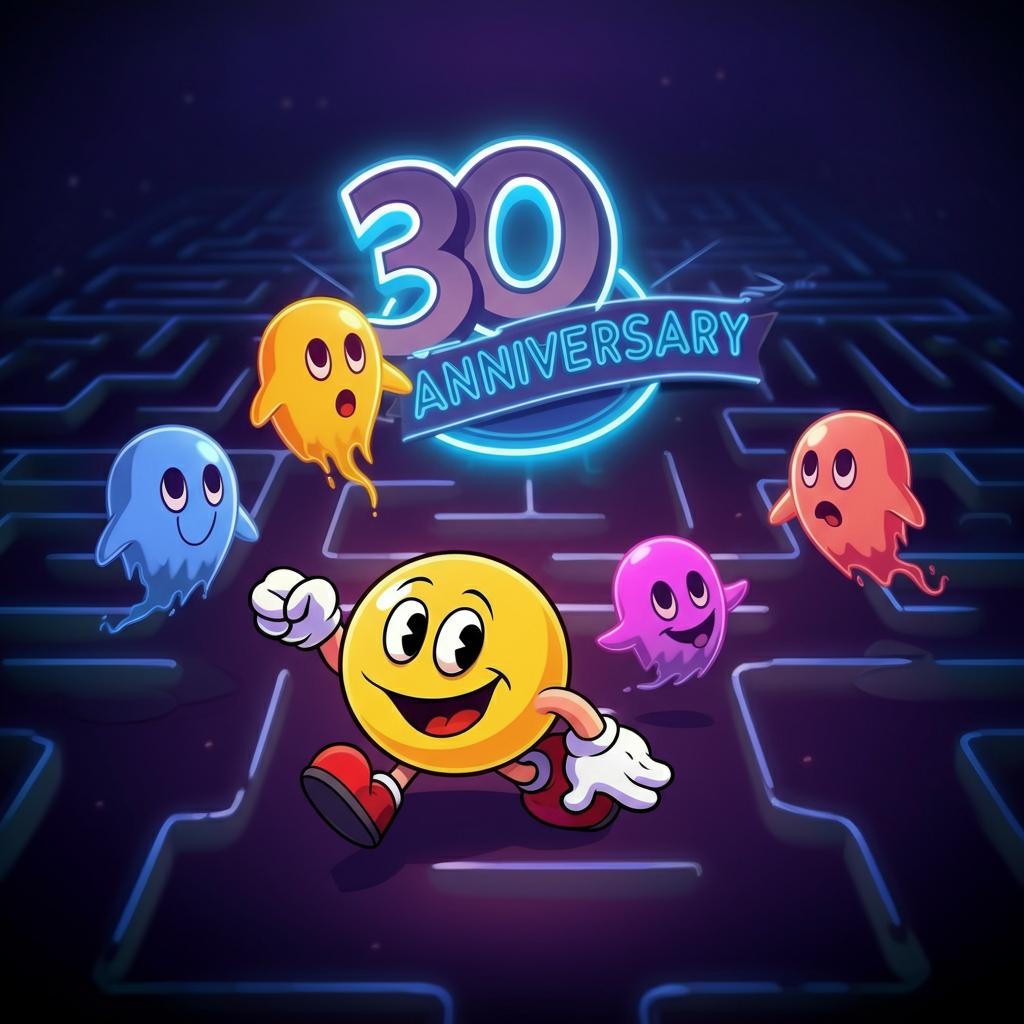
That Friday marked the Pacman 30th anniversary, and to celebrate, Google unveiled something the world had never seen before: a fully playable, interactive homepage logo.
What started as a nostalgic tribute quickly turned into a global productivity crisis.
Workers, students, and casual browsers found themselves glued to the search engine’s homepage, guiding the yellow, pizza-shaped hero through a neon maze.
It was a pivotal moment in digital history, proving that browser-based gaming could be just as engaging as the arcade cabinets of the 1980s.
The History of a Pop Culture Icon
Before it was a Google Doodle, Pac-Man was a gamble. In the late 1970s, arcades were dominated by aggressive space shooters like Space Invaders and Asteroids.
The industry was marketed almost exclusively toward boys and men, filled with aliens, lasers, and explosions.
Enter Tōru Iwatani
Tōru Iwatani, a designer at Namco, wanted to change the status quo. He aimed to create a game that appealed to a broader audience, including women and families.
His inspiration famously struck while eating a pizza; looking at the pie with a slice missing, he envisioned a character that would chomp its way through a maze.
Originally titled Puck Man in Japan (derived from the phrase “paku paku,” mimicking the sound of eating), the name was changed to Pac-Man for the US release to prevent vandalism on arcade cabinets.
When the game launched in 1980, it was an instant sensation. It introduced colorful characters, non-violent gameplay, and the concept of power-ups to the video game industry.
Three decades later, that legacy would be honored on the world’s biggest digital stage.
Inside the Pacman 30th Anniversary Google Doodle
The Google Doodle released on May 21, 2010, was a technical marvel. Prior to this, Google Doodles were static images or simple animations.
The Pac-Man project was the first time the logo became a fully functional piece of software.
Led by senior UX designer Marcin Wichary and doodler Ryan Germick, the team didn’t just want to make a game that looked like Pac-Man; they wanted it to feel like the original arcade masterpiece.
A Faithful Recreation
To achieve authenticity, the developers partnered with Bandai Namco. They recreated the game from scratch using JavaScript, HTML, and CSS, a massive feat at the time.
The attention to detail was obsessive:
Original Logic
The team ported the original game logic to the web, ensuring the movement felt right.
Audio
They recreated the iconic “waka-waka” sound effects and the opening jingle.
Visuals
The graphics were pixel-perfect matches to the 1980s sprite sheets.
The Glitches
In a move of true dedication, the developers even included the famous “kill screen” bug that occurs on level 256,
where the game runs out of memory and displays a jumbled mess of characters.
The Ms. Pac-Man Easter Egg
The doodle included a secret feature that many users missed initially. If a player pressed the “Insert Coin” button a second time, Ms. Pac-Man would appear on the screen.
This unlocked a two-player cooperative mode, allowing one person to control Pac-Man with the arrow keys and another to control Ms. Pac-Man using the W-A-S-D keys.
Why Did the Doodle Go Viral?
The impact of the Pacman 30th anniversary doodle was immediate and staggering. It was accessible, free, and sat on the most visited webpage on the planet.
According to a study by RescueTime, the doodle consumed approximately 4.8 million hours of user time.
When factoring in the average wage of a Google user at the time, analysts estimated the game caused a global productivity loss of roughly $120 million.
Guinness World Records later recognized the event, noting that over 500 million hours had been played in total. It wasn’t just a distraction; it was a testament to the game’s timeless design.
Fans who hadn’t touched a joystick in years found themselves instantly remembering the patterns, while a new generation discovered the franchise for the first time.
How to Play the Game (and Win)
Even though the doodle was originally scheduled for a 48-hour run, it is still archived and playable today.
Whether you are a veteran chasing a high score or a newcomer trying to survive the first level, understanding the mechanics is key.
The Objective
The goal is simple: navigate the maze, eat all the small dots (pellets) to advance to the next level, and avoid the four ghosts.
Eating the large flashing “Power Pellets” turns the ghosts blue, making them vulnerable to being eaten for bonus points.
Understanding the Ghosts
The secret to mastering Pac-Man is realizing that the ghosts are not moving randomly. Each one has a distinct personality and artificial intelligence programmed into the game:
| Ghost Name | Color | Personality / Behavior |
| Blinky | Red | The Chaser: Blinky aggressively pursues Pac-Man. He targets your current position directly. |
| Pinky | Pink | The Ambusher: Pinky aims for the space in front of Pac-Man, trying to cut you off. |
| Inky | Blue | The Wild Card: Inky’s movements are unpredictable because they are calculated based on both Blinky’s position and yours. |
| Clyde | Orange | The Feigner: Clyde chases you until he gets close, then he retreats to his corner. He acts confused or uninterested. |
Controls
- Desktop: Use the Arrow Keys to navigate the maze.
- Mobile: Simply Swipe in the direction you want to move.
- Two-Player: Click “Insert Coin” twice to spawn Ms. Pac-Man. Player 2 uses W-A-S-D.
Legacy and Future: Road to the 45th Anniversary
The success of the 30th-anniversary doodle proved that retro gaming holds a powerful place in modern culture.
It paved the way for future interactive doodles, such as the Jerry Lawson cartridge game and the Champion Island Games for the Olympics.
Pac-Man’s legacy continues to evolve. In 2025, the franchise celebrates its 45th anniversary.
Bandai Namco has already begun teasing celebrations, including collaborations with LEGO, crossovers with modern games like Fall Guys, and special events at major pop culture hubs like Harajuku.
The franchise has survived because it relies on pure gameplay rather than graphics. It remains deceptively straightforward, easy to learn, but difficult to master.
Frequently Asked Questions
Can I still play the Pacman 30th anniversary doodle?
Yes! While it was removed from the main homepage after its initial run, Google maintains an archived version.
You can play it by searching for “Pacman 30th anniversary” or visiting the Google Doodles archive.
What is the “kill screen”?
The kill screen is a famous glitch from the original arcade game that occurs on level 256.
Due to an integer overflow error (the system could not store a number higher than 255), half the screen fills with garbled code, making the level impossible to complete.
The Google Doodle faithfully recreates this bug.
Who holds the high score for Pac-Man?
The perfect score in a standard game of Pac-Man is 3,333,360 points.
This requires eating every dot, power pellet, fruit, and ghost on the first 255 levels, and then scoring as much as possible on the kill screen.
The first person to achieve this was Billy Mitchell in 1999.
Why does the maze look different in the Doodle?
Unlike the original rectangular arcade maze, the Google Doodle maze was designed around the letters of the word “Google.”
This changed the strategy slightly, creating new corners and escape routes that didn’t exist in the 1980 version.
Is the Google Doodle harder than the arcade game?
Many players find the Doodle slightly more difficult because the maze layout (spelling “Google”) is wider and has different choke points than the original vertical design. However, the ghost logic remains the same.
A Timeless Digital Treasure
Whether you are revisiting the doodle to kill five minutes or trying to show a younger player where gaming began, the waka-waka sound of Pac-Man remains a universal language of fun.
Jake Miller is a mobile troubleshooting specialist with 7+ years of experience solving Android and app-related issues. He tests every fix on real devices to ensure accuracy and reliability. Jake creates simple, step-by-step guides to help users quickly resolve everyday smartphone problems.