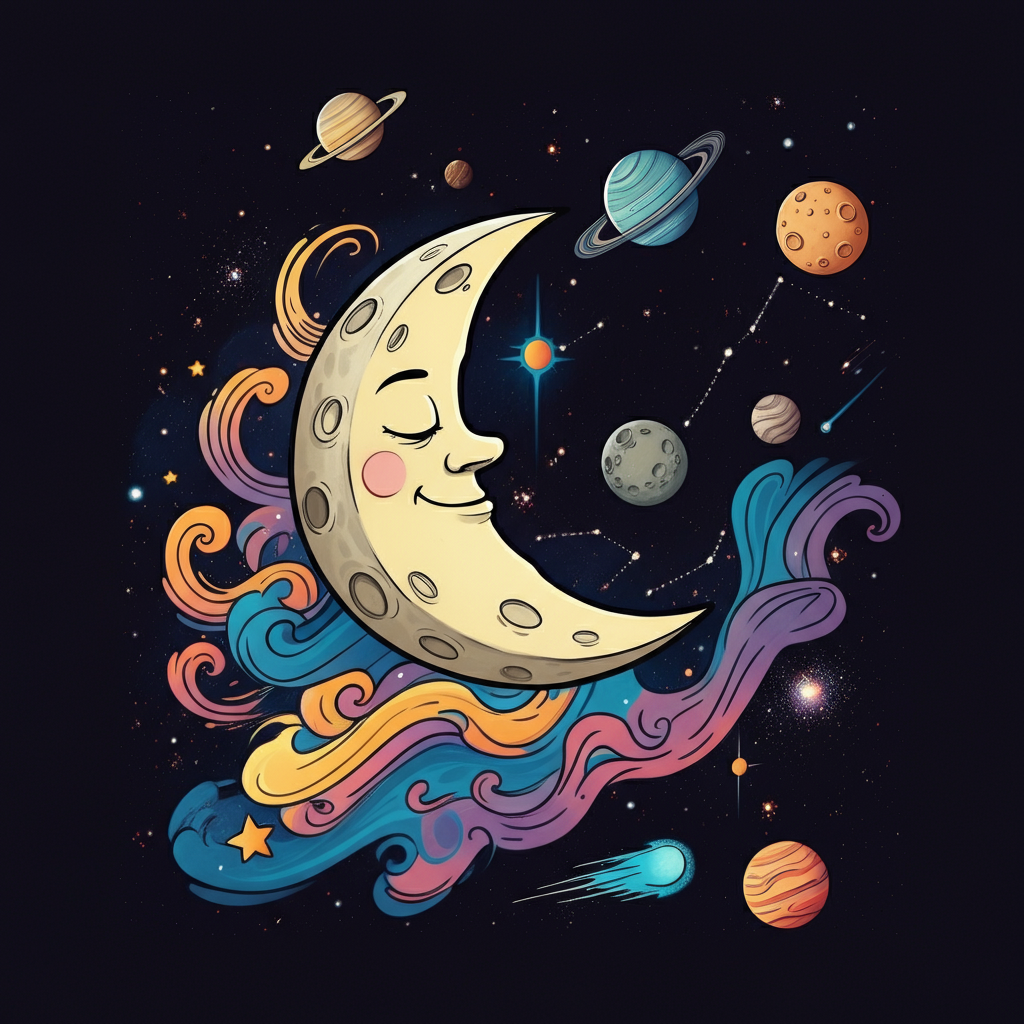
Have you noticed the celestial artwork taking over the Google homepage recently? It isn’t just a pretty picture; it’s a portal to a surprisingly deep strategy game.
The Rise of the Half Moon Google Doodle has captivated players worldwide, blending relaxing lo-fi aesthetics with cutthroat card-matching gameplay.
What is the Rise of the Half Moon Doodle?
The Rise of the Half Moon is an interactive, recurring card game developed by Google. Unlike one-off Doodles that disappear after 24 hours, this game is designed to return every month to coincide with the actual lunar cycle.
The game celebrates the “Half Moon” scientifically known as the Quarter Moon. Why the confusion?
While it looks like half the moon is lit up to our eyes, astronomers call it a Quarter Moon because the moon has completed one-quarter of its orbit around Earth.
The Doodle invites you to play a card game against the Moon itself.
With tarot-inspired graphics and a soothing soundtrack reminiscent of Stranger Things, it’s a battle of wits to see who can connect the phases of the moon most effectively.
How do you play the game?
The core gameplay involves a 3×3 grid (which expands in difficulty) where you and the AI take turns placing cards. The goal is to earn more points than the Moon by creating specific patterns.
Here is a breakdown of how the scoring works:
Phase Pairs (1 Point)
Place two identical cards next to each other (e.g., two Waxing Crescents).
Full Moon Pairs (2 Points)
Place two cards that are opposite phases next to each other. If you combine their lit portions, they would create a full moon (e.g., a Waxing Crescent and a Waning Gibbous).
Lunar Cycles (1 Point per card)
Connect three or more cards in their correct lunar order (e.g., Waxing Gibbous → Full Moon → Waning Gibbous).
Can you steal points?
Yes! This is where the strategy gets intense. If your opponent builds a Lunar Cycle, you can steal it by placing the next correct phase at either end of their chain.
For example, if the Moon plays a New Moon and a Waxing Crescent, you can place a First Quarter moon next to them. The entire chain turns your color, and you steal the points.
What are the Wild Cards and how do they work?
This is the secret weapon most players miss. If you win three levels in a row, you “reach the moon” and unlock special Wild Cards. These cards have powerful effects that can turn the tide of a losing game.
Because the game updates monthly, different Wild Cards are available depending on the time of year.
Here is a comprehensive guide to the Wild Cards discovered so far, filling the gap that most standard guides miss.
October Wild Cards
| Card Name | Effect |
| Hunter Moon | Destroys all cards controlled by the Half Moon and returns them to the deck. |
| Leonids Meteor Shower | Randomly destroys 2 cards on the board. |
| Super Moon | Full Moon Pairs are worth double points for you during the current level. |
| Scorpio | The Half Moon gets zero end-game bonus points for the current level. |
November Wild Cards
| Card Name | Effect |
| Beaver Moon | Choose a moon card on the board to flip horizontally. |
| Geminid Meteor Shower | Claim half of the Moon’s claimed cards on the board. |
| Winter Solstice | Your claimed cards cannot be stolen for the current level. |
| Sagittarius | Your next match will be worth triple points. |
Future Wild Cards (Sneak Peek)
- Wolf Moon (Jan): Destroy a card and all cards connected to it.
- Snow Moon (Feb): Makes Full Moon Pairs worth 3x points.
- Worm Moon (Mar): Makes each card in a Lunar Cycle worth +1 point.
- Pink Moon (Apr): Steal any points the Half Moon earns this level.
- Flower Moon (May): Place a card anywhere to claim it and any connected cards.
How can you beat the Moon?
The AI can be aggressive, often setting up long chains only to steal them back at the last second. To ensure you win your three levels and earn those wild cards, keep these strategies in mind:
Prioritize Lunar Cycles
These are worth the most points. A long chain of 5 or 6 cards is often an instant win.
Play Defense
If you see the Moon building a cycle, try to block one end of it with a card that doesn’t fit the sequence.
Save Your Wild Cards
You don’t have to use a Wild Card the moment you get it. Save powerful cards like the Hunter Moon (board wipe) for the third and most difficult level.
Watch the Board Borders
The grid changes shape in later levels. Don’t trap your own cards in a corner where they can’t be connected to a pair.
Is the design scientifically accurate?
Google’s team, including artists like Helene Leroux and Nate Swinehart, worked to ensure the game was both beautiful and educational.
The cards represent the actual phases of the lunar cycle:
- New Moon
- Waxing Crescent
- First Quarter
- Waxing Gibbous
- Full Moon
- Waning Gibbous
- Final Quarter
- Waning Crescent
While the “Half Moon” character is stylized with a peaceful, emotive expression, the terminology used in the descriptions helps correct the common misconception between a “Half Moon” (visual) and a “Quarter Moon” (scientific).
Ready to play?
The Rise of the Half Moon is more than just a quick distraction; it’s a clever blend of education and strategy wrapped in a stunning visual package. With new cards arriving every month, it offers high replayability for puzzle lovers.
If you want to keep track of the lunar cycle even when you aren’t playing, Google has released a downloadable wallpaper set to keep your desktop looking celestial.
[Play the Rise of the Half Moon Doodle Now].
Jake Miller is a mobile troubleshooting specialist with 7+ years of experience solving Android and app-related issues. He tests every fix on real devices to ensure accuracy and reliability. Jake creates simple, step-by-step guides to help users quickly resolve everyday smartphone problems.